
Why
Graduate programs, professional schools, and employers like to ask some variation of the same question when our students apply: why do you want to do this?
They ask this question because what you are able to do is dependent on why you do it. Clarity of purpose is critical, not only at the start but throughout one’s career.
Successful professionals develop the intellectual skills to reinvent themselves over time. Resilient people acquire the emotional tools to seek meaning and purpose long after their formal training is done.
“Narrative knowledge” is the phrase we use to identify this toolbox. To know how stories work is to know why stories matter to life and work beyond the page.
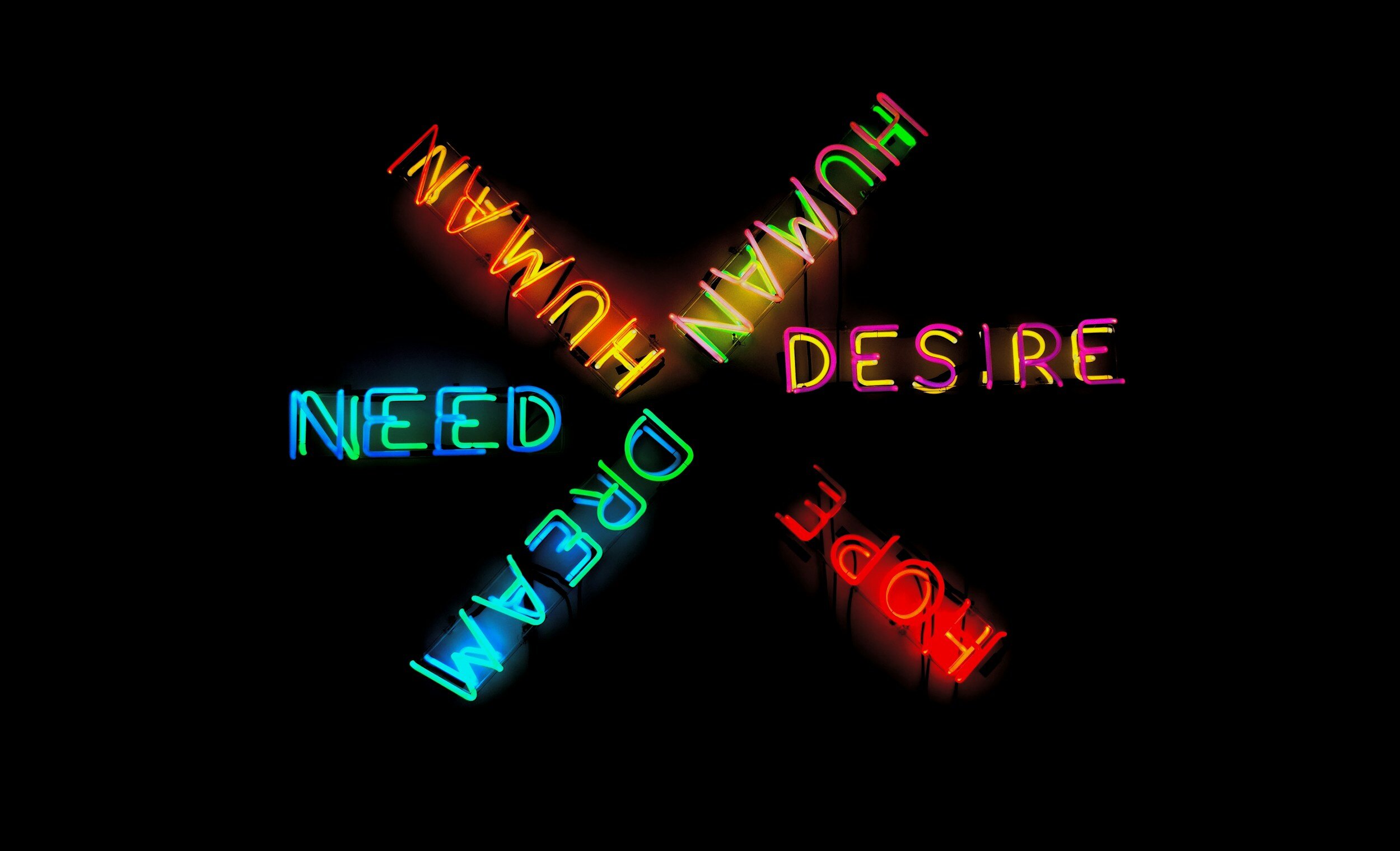
“It is through stories that we find meaning and, ideally, integrate challenging experiences into our identity, so that we can move forward with optimal health. It is in sharing our stories without apology that we come to accept ourselves fully, as we are, without shame.”
— Annie Brewster, The Healing Power of Storytelling

“Story is what enabled us to imagine what might happen in the future, and so prepare for it – a feat no other species can lay claim to, opposable thumbs or not. Story is what makes us human, not just metaphorically but literally. Recent breakthroughs in neuroscience reveal that our brain is hardwired to respond to story; the pleasure we derive from a tale well told is nature’s way of seducing us into paying attention to it.”
— Lisa Cron, Wired for Story

“Our capacity to move forward as developing beings rests on a healthy relation with the past. Psychotherapy, that widespread method for promoting mental health, relies heavily on memory and on the ability to retrieve and organize images and events from the personal past. We carry our wounds and perhaps even worse, our capacity to wound, forward with us. If we learn not only to tell our stories but to listen to what our stories tell us – to write the first draft and then return for the second draft – we are doing the work of memory.”
— Patricia Hampl, I Could Tell You Stories

“In Sapiens: A Brief History of Humankind, Yuval Noah Harari points out that it is not language itself but the related capacity to imagine what is not immediately present that distinguishes the human species. To imagine what is not immediately present allows us spirituality, nationhood, commerce, and law, and it is of course the essence of story.”
— Janet Burroway, Writing Fiction

“Those who do not have power over the stories that dominate their lives, power to retell them, rethink them, deconstruct them, joke about them, and change them as times change, truly are powerless because they cannot think new thoughts.”
— Salman Rushdie, Imaginary Homelands: Essays and Criticism

“People don't buy what you do; they buy why you do it. And what you do simply proves what you believe.”
— Simon Sinek, Start with Why


Narrative knowledge never loses value. It is intellectual gold. The human skills you develop in our program are increasingly scarce and will never be obsolete.
-
Our English and Writing Program offers specific training for students interested in teaching, professional writing, healthcare & medicine, and law, as well as broad skills and habits of mind to prepare our students for an unpredictable job market.
Our interdisciplinary courses build the fundamental skills of close reading, critical thinking, and communication that have lasting value in any field, from business to psychology, history to philosophy.
We prepare students intentionally to interpret the stories told in other disciplines. Such as the astrobiologist using language to imagine the potential range of life on other planets. Or the economist analyzing the power of story to shift a bear market to a bull market.
Narrative knowledge is an interdisciplinary key to entry for a variety of careers. To study narrative is to be a doctor (to diagnose unspoken details), an historian (to interpret the meaning of a setting), a psychologist (to understand character behavior), a sociologist (to analyze how social norms determine the actions within a plot), and more.
As a result, English and Writing is also an ideal second major for many students. It pairs easily with business, history, biology, psychology, and more, thanks in part to the low credit requirement of our program (30 credits).
Our major also serves as an excellent primary major in combination Doane’s new Pre-Health Minor. Add our Narrative Medicine Certificate, and you are on your way to success in medical school, nursing school, and the like.
-
The human skills gap is widening. A Future of Jobs Report, released in 2023 by the World Economic Forum, described the narrative knowledge toolbox as critical needs in the workforce, both now and well into the future:
“Analytical thinking and creative thinking remain the most important skills for workers in 2023. Analytical thinking is considered a core skill by more companies than any other skill and constitutes, on average, 9% of the core skills reported by companies. Creative thinking, another cognitive skill, ranks second, ahead of three self-efficacy skills – resilience, flexibility and agility; motivation and self-awareness; and curiosity and lifelong learning – in recognition of the importance of workers’ ability to adapt to disrupted workplaces.”
The skills fostered in English and Writing apply directly to the most critical needs of employers in an increasingly tumultuous economy. Narrative analysis develops critical and creative thinking. It cultivates empathy and ethical reasoning. The creative and analytical writing we do in our program teaches our students how to communicate with diverse audiences and craft compelling arguments.
In short, we equip our students to adapt and thrive in an exciting but uncertain world.
-
Humans are wired for story. Narrative is woven into our DNA. Story and storytelling make us human. Narrative is the essence of self and civilization.
In the introduction to Writing Fiction, Janet Burroway writes, “In Sapiens: A Brief History of Humankind, Yuval Noah Harari points out that it is not language itself but the related capacity to imagine what is not immediately present that distinguishes the human species. To imagine what is not immediately present allows us spirituality, nationhood, commerce, and law, and it is of course the essence of story” (xvii).
To imagine what is not immediately present is to ask why, and so to understand how stories work is the first crucial step toward personal reward and future success.
We explore the role and structure of narrative in all its forms, from its earliest origins to recent expressions in gaming and podcasts.
We also examine the individual self is an unfolding story, so we can apply the techniques of storytelling and literary analysis to human interactions beyond the page, from the classroom to the courtroom to the board room.


Have an idea?
The meaning of your life is a story.
Only you can tell it.